The Crowded Table — From Their Side of the Table
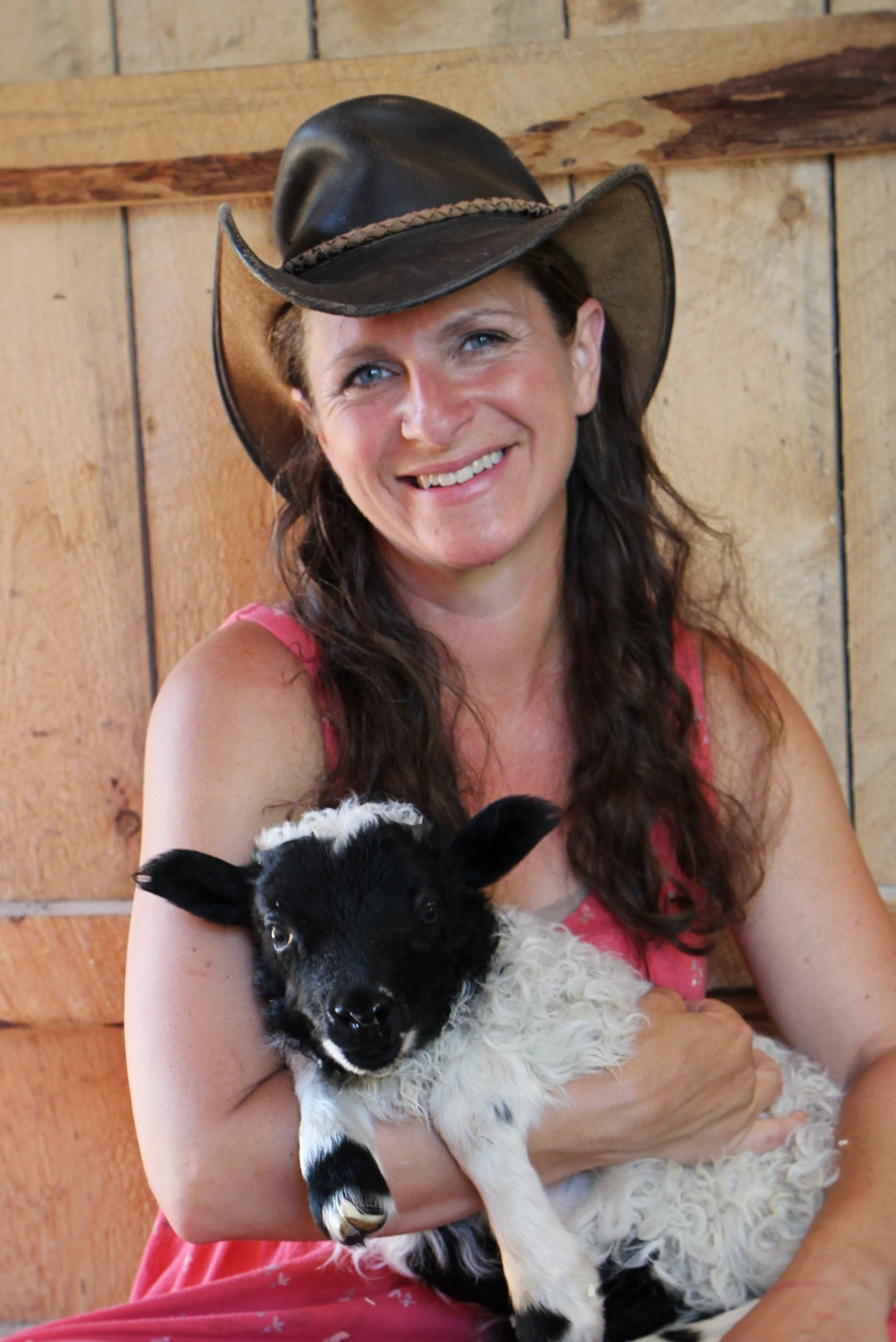
Amy Hill hates being asked to describe herself. She says so almost immediately, laughing a little at the discomfort of having to take an entire life and reduce it to a few tidy sentences. Farmer works, of course, but it does not quite cover it. Neither does mother, grower, livestock keeper, cook, steward, or any of the other words that belong to her. What comes through more clearly as she talks is that Amy is someone deeply interested in relationships: between soil and animals, livestock and pasture, gardens and kitchens, farmers and the people they feed. She cares about diversity in food production because she sees the farm not as a collection of separate enterprises but as a living place where everything is constantly affecting everything else.
“I really want food production to include a lot of diversity and not just be monoculture,” she says. She worries about landscapes becoming too narrowly defined by a single commodity, whole areas known only for beef or blueberries or grain, when natural systems thrive through variation. For Amy, diversity is not an abstract agricultural principle. It means healthier soils, healthier livestock and a landscape that continues to offer something to the birds, deer, bears, insects and other lives moving through it. It also means finding ways for the pieces of her own farm to support one another rather than operating in isolation.
Her farm includes pasture poultry and hogs, laying hens, produce, greenhouses, perennial herbs and cattle, although she is quick to point out that the cows are largely there for her own family and, perhaps even more, for her heart. Their milk becomes cheese and other food in the house, but the cattle also add another species to the grazing system. Produce that cannot be sold can feed livestock. Weeds become food instead of waste. Animals move across pasture, fertilizing as they go. Bedding collected over winter can be composted and returned to the soil. Healthy pasture feeds healthy animals, and those animals, properly managed, help build healthier pasture in return. Amy likes systems that fold back into themselves.
Perhaps that instinct began long before she understood it as farming.
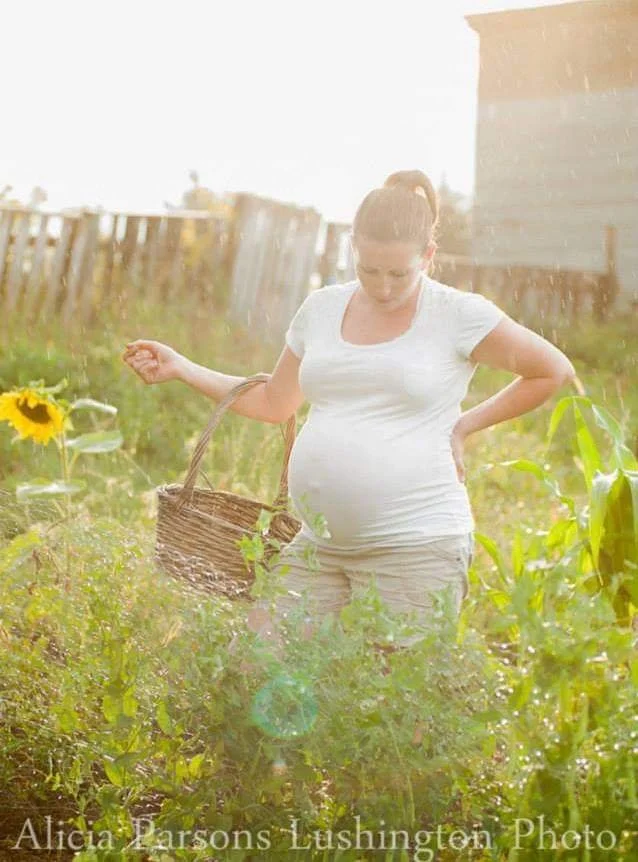
She did not grow up on a farm, but every summer until she was eighteen, her parents took the family to a working farm in Prince Edward Island. Somehow they had found a place that combined a bed and breakfast and a handful of cottages with beef cattle, chickens, sheep at various times, field crops and a large garden. Guests were not kept at a polite distance from the farming. They could walk into the garden in the morning, dig potatoes, head to the henhouse for eggs and carry breakfast back to the cottage.
Amy remembers riding her bike along dirt roads and running through cow pastures. She learned to drive there. She remembers the garden and the teasing game of being asked to identify what was growing, the kind of family joke that becomes funny precisely because it is repeated for years. She remembers those summers as some of the happiest parts of her childhood. Farming entered her life not first as work, but as a feeling: space, freedom, good food, dirt roads, animals, and the pleasure of knowing where breakfast had come from.
Later, she enrolled at the Agricultural College in Truro and studied animal science. At the time she expected wildlife rehabilitation to become her career. Farming might live alongside it, perhaps as a homestead, perhaps as something small. She loved agriculture but had not yet imagined that it would eventually take over the centre of her life.
Those college years also coincided with a much more complicated relationship with food. Amy had been vegetarian and had struggled with disordered eating. Surrounded now by classmates who had grown up farming, she began having conversations about livestock, food production and agriculture that made food less abstract. She became increasingly interested in nourishment, where food came from and what it might mean to participate in that process herself. Rather than wanting more distance from the animals she ate, she found herself wanting greater responsibility for them, to know how they had lived and eventually to raise some of that food herself.
After school she continued working in wildlife rehabilitation while slowly building a small agricultural life around it. There was a garden, some pigs, some chickens. Over time, the balance shifted. She became increasingly drawn to heirloom vegetables and heritage breeds and to older agricultural practices that seemed to have been pushed aside, not because she believed the past had all the answers, but because she felt certain things had been lost too quickly. She wanted to keep what was useful from those older ways and marry it to the things modern farming could genuinely improve. Today she has a tractor. She uses irrigation. She is not interested in unnecessary hardship for the sake of authenticity. The question is not whether something is old or new, but whether it helps build the kind of farm she is trying to create.
By late 2010 or early 2011, that small farm had become difficult to dismiss as a side project. Amy had a good job, one with reliable hours, healthcare and protections, and importantly, it was work she actually liked. She enjoyed wildlife rehabilitation and her work in natural resources. Leaving was not an act of fleeing a life she hated. It was the harder kind of decision, leaving something perfectly respectable because something else felt more like her.
“I just think this actually is me,” she remembers realizing. “This is just what I want to do. This is the way I feel best about being on this planet and what I’m supposed to do.”
More than a decade later, she is still trying to become better at it.
Not bigger, necessarily. Not more profitable at any cost. Not more productive simply for the satisfaction of saying the farm grew again. When Amy talks about improvement, she means becoming a better farmer and a better steward: of the land, of the livestock, of her customers, of her family and of the community around her. The farm has changed repeatedly because of that commitment. Enterprises have expanded, shrunk and disappeared. Things she expected to work have not worked. Things she loved have still had to go.
That willingness to change sits in tension with another reality of farming: no matter how much you learn, the work has a way of reminding you how little control you actually have.
Amy wishes people understood the sheer amount of themselves farmers put into producing food. She does not reserve that understanding for farmers who operate exactly as she does. Conventional farmer, organic farmer, homesteader, hobby farmer, large producer or small one, the specifics are different, but growing food becomes entangled with the rest of your life in ways many jobs do not. You can leave the farm without really leaving it. Rain follows you into bed. Drought follows you into dinner. You watch the forecast differently when everything living outside your door depends upon it.
One year there is too much rain, so you rethink drainage, invest money and labour and convince yourself you are better prepared. The following year brings drought. Then you need irrigation and ways of holding water. Perhaps the next season the rainfall is nearly perfect, but cucumber beetles arrive in force. There is a particular humility in repeatedly solving yesterday’s problem only to discover that the land has moved on to something else.
“There’s always a fire somewhere that you have to put out,” Amy says, and patience becomes part of the job simply because the alternative is to unravel every time the season changes the rules.
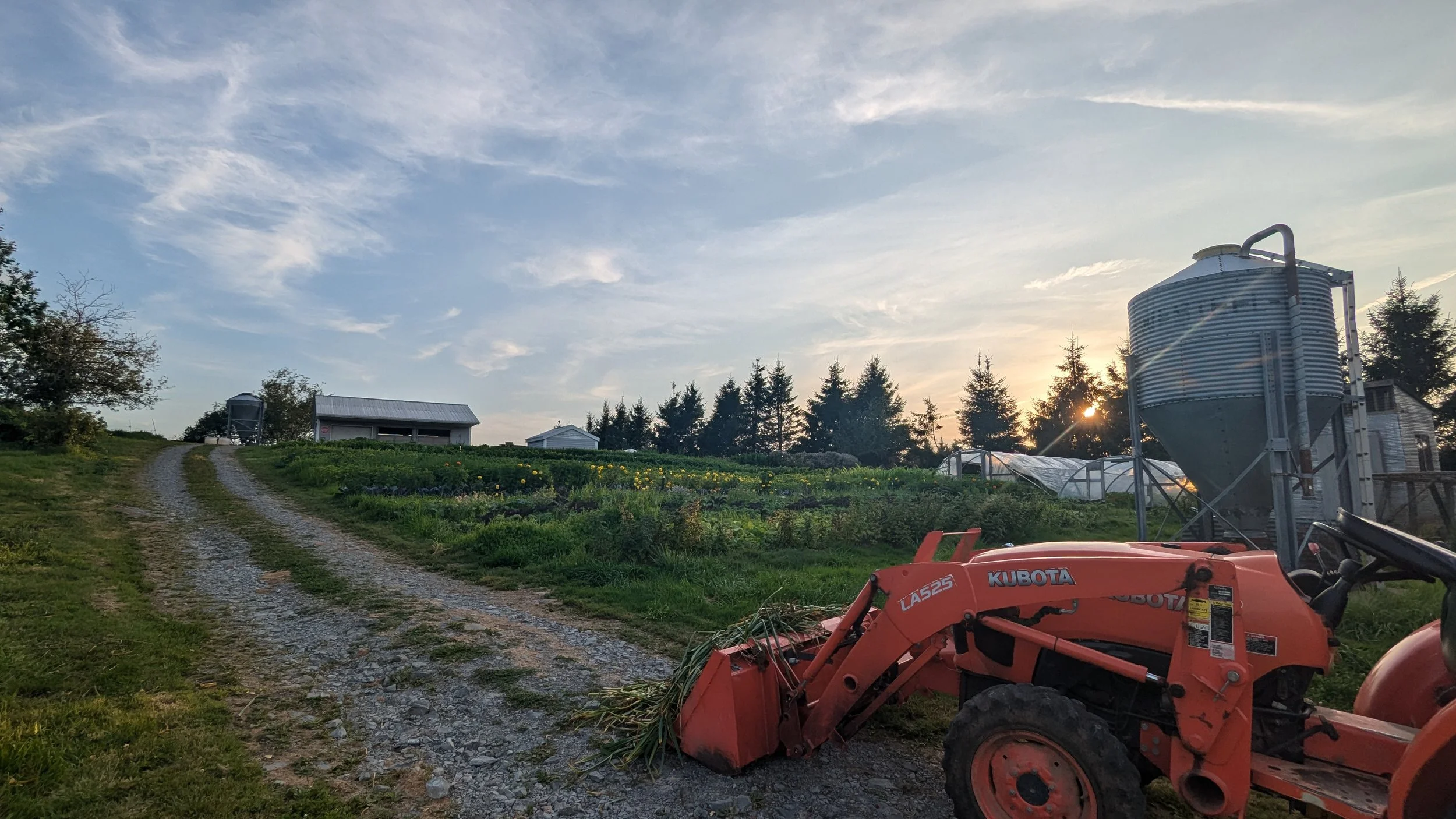
A summer day on the farm begins around 5:30, although nothing useful happens before coffee. Amy is usually the first person awake in the house and values those quiet minutes before anybody talks to her. She makes coffee, listens to the news, gets breakfast going, and then the farm begins demanding its share of the day.
The laying hens and broilers are let out, fed and watered. Nest boxes are opened. The pigs need checking, feeding and sometimes moving. Everyone moves through fresh pasture regularly, so some mornings include fencing and relocation. The cattle are grazing throughout the summer, which means checking water and judging whether there is enough grass left or whether it is time to move them too. From there Amy generally heads toward the gardens.
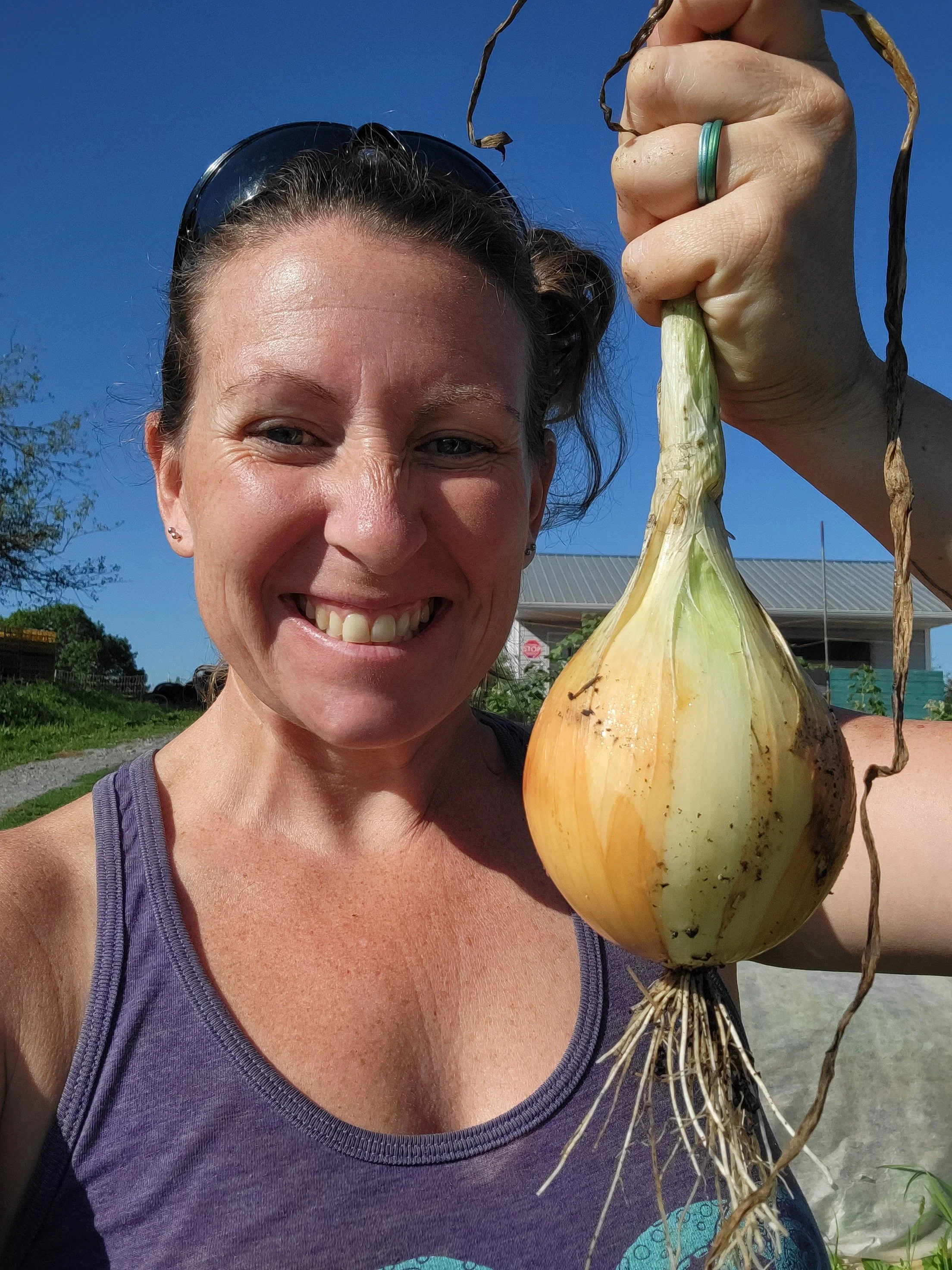
Harvest days are some of the hardest and some of her favourites. Tomatoes, cucumbers, zucchini, hot peppers, sweet peppers, onions and green onions have to be picked, sorted and packed for deliveries. Orders are assembled. Bins accumulate. Somewhere in the middle of that, family life continues on schedule. Her daughter dances. Her son plays hockey. Someone needs a drive. Dinner has to appear. By evening there may still be irrigation to run or fencing to prepare for the following day. At sunset, the poultry come in. Most nights they know the routine; sometimes the broilers require encouragement.
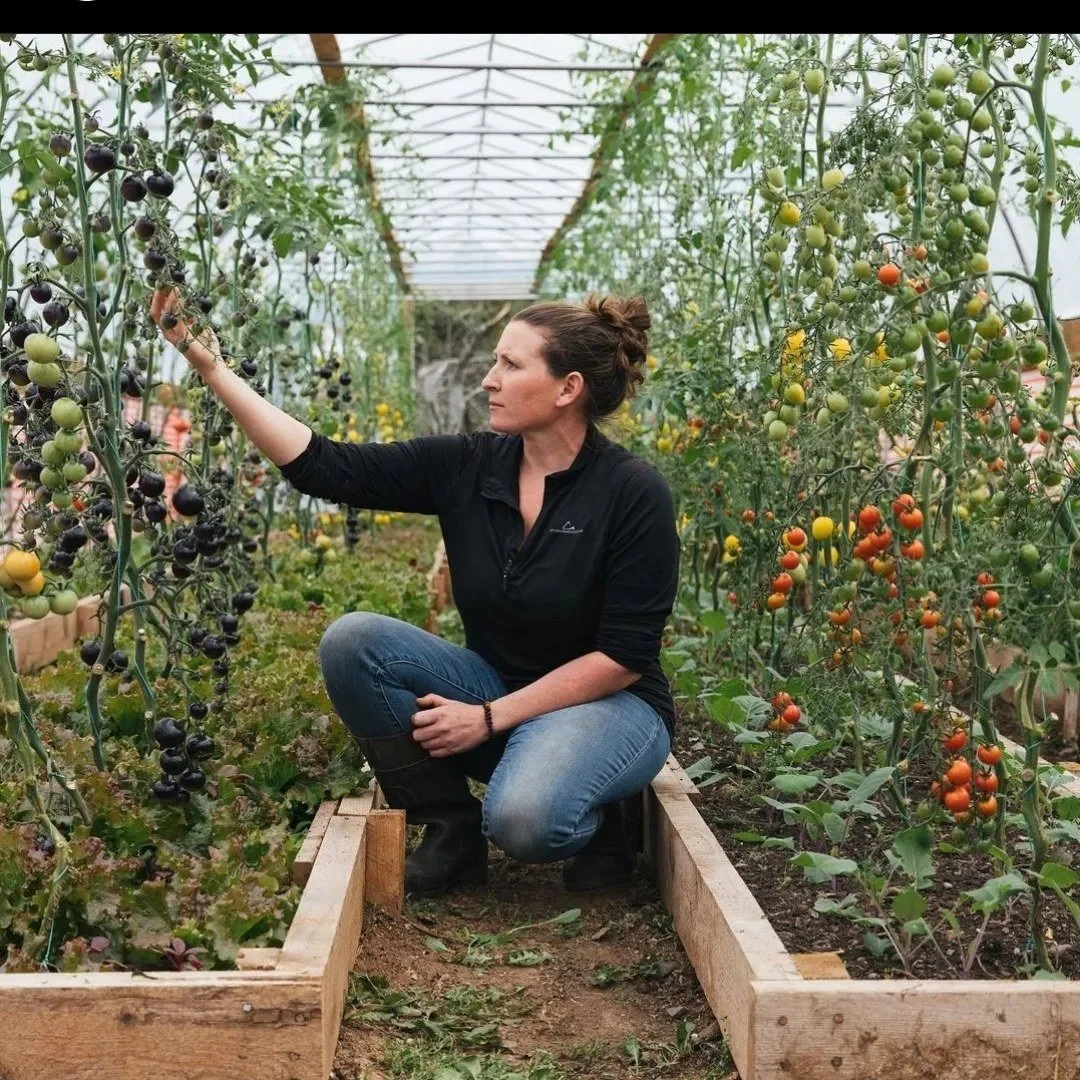
What makes those long days worthwhile is harvest itself. Amy loves trellising tomatoes and pruning them, but there is something about the moment food finally comes out of the field that still feels extraordinary to her. It is the visible evidence of work that, for weeks or months, has mostly looked like faith. A bin of beautiful produce, chicken returning from processing to be labelled and stored, pork going into the freezer, a meal made from what grew a few hundred feet from the kitchen: harvest closes the loop between effort and nourishment.
For all her talk about feeding people, though, one of the most important changes Amy has made to the farm was deciding to produce less.
Five or six years ago, the farm was producing much more food. There are things about that scale she still misses. There is pride in abundance, after all, and satisfaction in knowing how many families you are feeding. But when Amy looks back at that period, what she remembers equally clearly is that she had almost no time left for anybody.
“I was just producing food for my community.”
It took time to recognize the contradiction in that sentence. She had built a life around serving community and had become so busy doing it that she could barely participate in one.
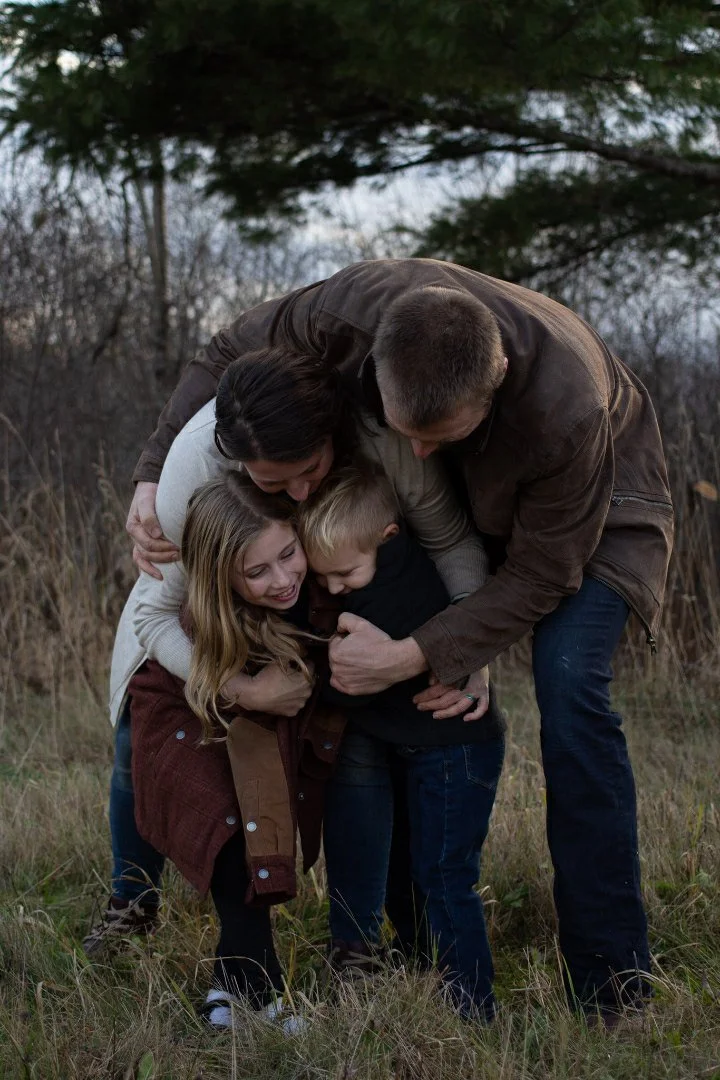
That realization broadened her definition of sustainability. Regenerative soil practices mattered. Rotational grazing mattered. Responsible livestock husbandry mattered. Financial viability certainly mattered. But if the farm could only survive by consuming Amy’s relationship with her husband, her children, her friends or the children’s own affection for farm life, then something was wrong with the system no matter how healthy the pasture looked.
She and her husband now make a point of sitting down, going through the farm finances and looking critically at each part of the operation. If something is not working, they are willing to cut it. That sounds simple until the thing that is not working is something you love.
For Amy, that was sheep.
They raised Katahdins for years, and she adored them. Sheep are, in her words, her heart animal. Even now, she feels their absence. But during that chapter of the farm, keeping them simply was not right. Eventually they sold the flock. They sold the fencing. They let that version of the farm end.
Of all the things she has built, grown and learned, Amy considers the ability to make decisions like that one of the accomplishments she is most proud of. Farming is full of pressure to keep going, to add another enterprise, increase production, push harder, endure another difficult year. There is less celebration of the wisdom required to admit that something beloved is making the whole less sustainable. Selling the sheep protected more than a balance sheet. It protected the future of the farm, Amy’s relationship with her husband and children, and perhaps even her children’s willingness to remember farming as something other than the thing that consumed their mother.
Reducing production created another kind of space too.
Amy’s community had always been generous with her. People showed up when greenhouse plastic needed to be stretched, when a barn needed building, when a grain silo needed standing, when garlic needed planting or a harvest needed extra hands. Again and again, people had stepped into the farm’s work when the family could not carry it alone. Amy eventually realized that although she had fed many of those same people, food had become almost the only thing she had time to give them.
“I really wanted to give back more pieces of me.”
So the farm changed again. She wanted the ability to leave for a day if a friend needed her, to help family without mentally calculating what disaster might be unfolding at home, to participate in the community she had spent so many years supplying. For Amy, community became less about how much food could leave the farm and more about whether there was still enough of her left to walk out the gate with it.
That understanding of food as relationship is part of what makes conversations about price difficult for her. Amy knows people are struggling. She knows there are families for whom higher food prices are not a philosophical question but a very real constraint, and there are years when she looks at what it costs to grow her own food and wonders whether she could afford to buy it herself if she were not the one producing it. She has no interest in shaming people for that reality.
What worries her is the conclusion that the solution must always be cheaper food.
Food has already been pushed toward extraordinary cheapness, she argues, and the real cost does not disappear simply because it is removed from the price tag. It shows up elsewhere, in the pressure placed on farmers, in degraded soil, in systems built for volume rather than resilience, in the lives of animals and in landscapes stripped of diversity.
“We don’t want cheaper food,” she says. “We want cheaper cell phones, not cheaper peppers.”
It is a funny line, which may be why it works. It interrupts the familiar assumption that food is the obvious place to demand endless efficiency. Amy is not arguing that everyone should simply pay more and stop complaining. She is asking us to notice what our economy has taught us to value, and what happens when the one thing every person genuinely needs is expected to cost as little as possible.
To Amy, food deserves almost the opposite response. She wants us to see the soil underneath it. The animals behind it. The grain that fed those animals. The farmer who checked the weather at two in the morning. The person who harvested it, washed it, packed it, drove it somewhere and hoped enough people would understand what they were looking at to keep the whole thing going another season.
“Food is the only thing that gets us from birth until death,” she says. “Everything else in between is filler.”
It is said with a bit of exaggeration and a great deal of conviction. Food, in Amy’s world, is sustenance but also education. She wants her children to understand not simply how to grow things, but how to respect what it takes to feed people. She wants them to know the value of soil and livestock and the hands behind a meal. She wants food to remain something worth caring for rather than something anonymous that appears in a package.
For people who want to build a closer relationship with local food, she does not think the first step has to be dramatic. Buy eggs from somebody nearby. Stop at a farm market. Walk into the local store that makes space for local producers. Follow a farmer online and learn their name. Ask whether they sell directly. Ask if there is a day you can visit. Maybe one day that becomes a CSA share or half a hog or a freezer full of chicken, but it can begin much more simply, with curiosity and the decision to know a little more about who feeds you.
Amy’s own dreams for the future are surprisingly modest for someone who readily admits she is always dreaming. She and her husband talk about retirement, but neither seems to picture a clean departure from farm life. What Amy wants is longevity. She wants to build a farm that can change enough to let them grow old inside it. She wants to reach her seventies and still have her hands in the work, even if there is less of it to do.
Her image of that future is not grand. She imagines herself as a little old lady in the greenhouse with a cup of tea, still fussing with tomatoes.
It is easy to hear that as a charming retirement fantasy, but after listening to Amy talk for a while, it feels more significant than that. The farm has already asked her to reinvent it many times. It has taught her that more is not always better, that beloved animals can still need to leave, that serving a community means little if you no longer have time to sit with the people in it, and that sustainability has to include the human beings doing the sustaining. To still be drinking tea among the tomatoes decades from now would mean they got enough of those decisions right. Not that the farm never changed, but that it changed when it needed to.
Near the end of our conversation, I asked Amy who she would pull up a chair for if she could have one more person at the table.
Her answer came from a different place than the rest of the interview. She spoke about someone she loved and lost far too young, someone whose absence is still felt as the family continues growing around the space she left behind. Amy imagined the things she would have loved to see: the family as it is now, grandchildren, new people coming into their lives, all of the changes and ordinary joys she did not get to witness.
It was not really an answer about death. It was an answer about continuation.
So much of Amy’s life is built around things that continue because someone tends them. Soil gets better because fertility is returned. Pasture survives because animals are moved before it is exhausted. Food traditions survive because somebody keeps making them. Farms survive because somebody is willing to change what the farm looks like. Families continue because new people arrive, children grow, chairs are added, and the people who are missing are still somehow part of the stories told around the table.
Perhaps that is what has always drawn Amy to farming. The work makes continuity visible. Nothing begins completely with us and very little ends neatly when we are finished with it. The soil she is building now will belong to a future season. The children watching her farm are forming their own relationship with food and land, whether or not they eventually choose agriculture. The people who helped stretch greenhouse plastic or plant garlic have become part of the history of the place. Someone who is no longer able to sit at the table can still be present in the way the family gathers there.
Amy does not talk about leaving behind a perfect farm. She talks about making it better than it was the year before. Better for the livestock, better for the soil, better for the people who eat from it and better for the family whose life is tied to it. That is a much less dramatic ambition than conquering a market or building an agricultural empire, but perhaps a more difficult one, because it requires paying attention year after year and being willing to change when the answer changes.
One day, if things go the way she hopes, there will be an older Amy in a greenhouse, cup of tea nearby, tomatoes climbing above her. The farm around her will almost certainly not look exactly as it does today. Some enterprises will have disappeared. Others may have taken their place. Children will be grown. People she has not even met yet may have pulled up chairs at the family table. The landscape will have weathered decades Amy cannot predict.
And she will still be there, not because she forced the farm to remain the same, but because she learned how to let it change without losing the things at its centre: good soil, well cared for animals, food worth valuing, people worth making time for, and a place where there is still room for one more chair.