From My Side of the Table | Ancestry, Kinship & the Communities We Have Yet to Build
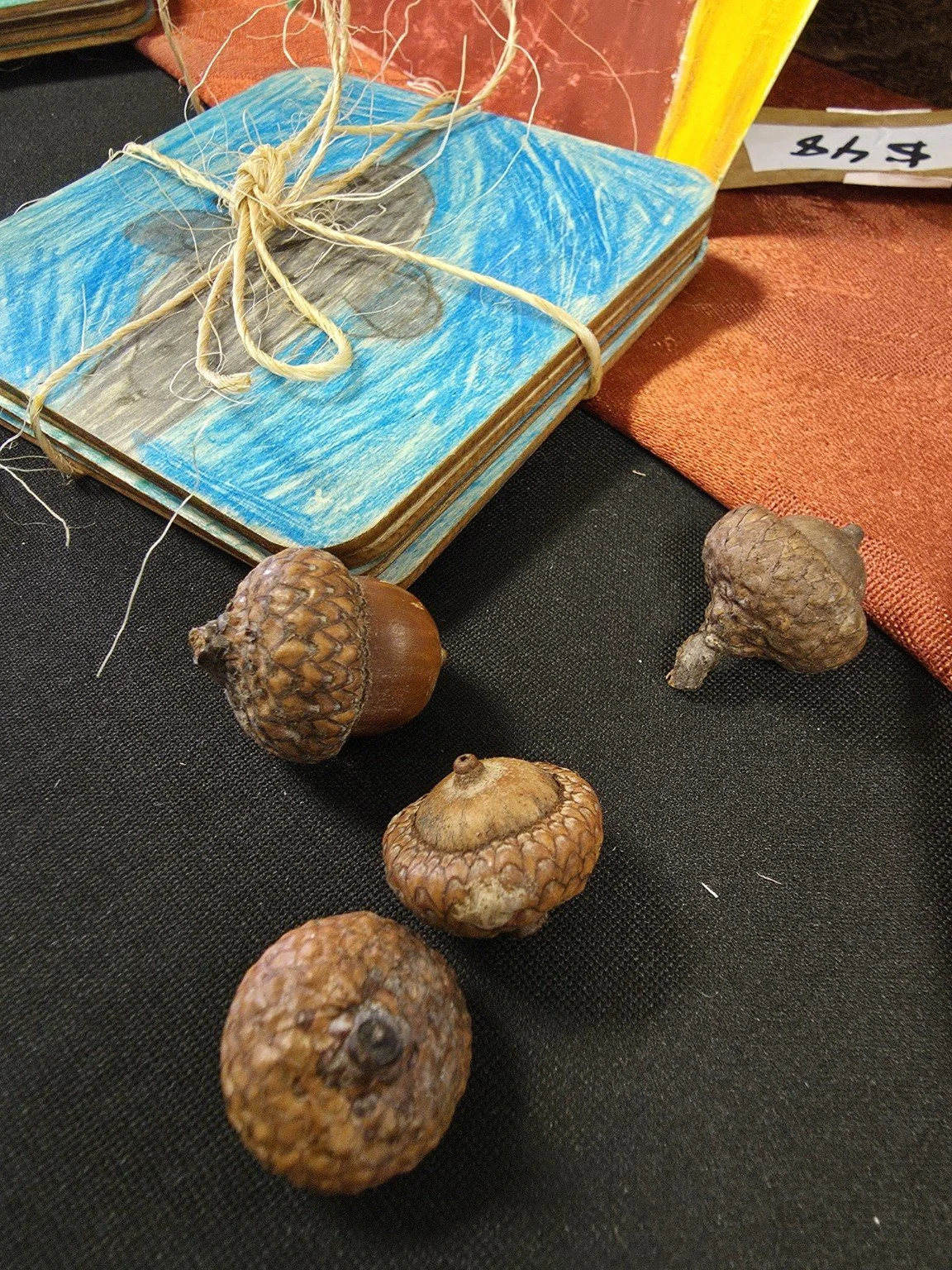
Yesterday, at the New Glasgow Farmers Market, we brought along a slightly unusual Halloween offering. Acorns to plant. I loved the idea of offering something that might become part of a much bigger story. Truthfully, it's fitting, given where my thoughts have been wandering lately.
This weekend was meant to include an in-person Soul Circle exploring sacred continuity, ancestry, legacy, and renewal. Although we weren't able to gather as planned, the conversations haven't disappeared. If anything, they've become more significant as I navigate some substantial changes in my own life and business.
There are a few words and concepts that have continued to swirl around in my thoughts. Kinship. Monastic commons. Collective responsibility. Legacy. And perhaps most importantly, what it actually means to live in alignment with the things we say we believe. I don't have some grand revelation to share. I seem to have more questions than answers these days. But I've always believed that asking better questions is how we begin to find our way toward something different.
The Wisdom of an Oak Tree
There's a beautiful old oak tree outside my home that I look at every single day. It's become something of a teacher to me. Its roots hold the soil, its branches offer shade and shelter, and its acorns nourish the wildlife while holding the promise of new life. Even as it sheds its leaves, it's feeding the ground beneath it.
I find tremendous strength in that tree. Through the hardest winters it stands, seemingly still, yet life continues beneath the surface. It reminds me that releasing what we no longer need doesn't mean losing what matters. Sometimes it's exactly what allows us to keep growing.
I've been thinking about that a lot lately. What am I holding on to because it matters, and what am I carrying simply because I've convinced myself I have to? What needs tending, and what needs to be allowed to die?
As some things in my own life begin to fall away, I'm noticing that the noise is getting quieter and the things that matter most are becoming clearer. Perhaps that's part of the wisdom of this season. We don't need to carry everything into the next one.
The Communities We Keep Talking About
A few concepts have been finding their way into my thoughts lately, particularly the idea of a monastic commons. I'm drawn to the simplicity and intentional rhythms of monastic living, alongside the shared stewardship and collective responsibility of a commons. What might happen if we brought more of those principles into the way we grow food, work, gather, and care for one another?
That's a conversation deserving of its own article, but it has me examining something much closer to home.
Am I actually building the community I wish existed, or am I spending too much time talking about why it doesn't?
I've also been thinking about echo chambers and how they work in both directions. We tend to recognize them in people whose perspectives differ from ours, but they're equally present in our own circles. The accounts we follow, the conversations we repeat, and even the stories we tell ourselves can reinforce possibility or convince us that everything is broken beyond repair.
I can surround myself with inspiring ideas and still accomplish very little. Equally, I can consume so much information about what's wrong with the world that I begin to believe nothing I do will make a difference. Neither is particularly helpful if I'm not willing to act.
So I've been asking myself some uncomfortable questions. Am I inviting people into the community I wish existed? Am I making participation accessible? Am I listening to people who challenge my thinking, or only those who confirm it? And perhaps most importantly, am I being the change I keep encouraging others to consider?
Where am I sitting in excuse?
I don't ask that lightly. Financial limitations, health, time, family responsibilities, and access to resources are very real barriers. I've been navigating enough of them myself lately to appreciate that we can't simply think our way out of difficult circumstances. But I also wonder how often fear and scarcity begin making decisions for us before we've even explored what's possible.
And then there's the question of what we're carrying.
I've spent much of my life creating opportunities, gathering people, and trying to build the things I wished existed. But if I truly believe in kinship, collaboration, and collective responsibility, I have to recognize that community cannot depend on one person carrying everything. I have to make room for others to contribute, to do things differently than I might, and occasionally to let something go.
Not every idea needs saving. Not every responsibility is mine. And sometimes letting a particular version of something end is what creates room for the vision behind it to grow.
What Are We Actually Passing Down?
This time of year always draws me toward my ancestors. I find myself thinking about the people who came before me, the lives they lived, what they endured, what they sacrificed, and the wisdom they gathered along the way.
I try to open my heart to them with compassion. For the choices they made with the knowledge and resources available to them, for the hardships they survived, and for the dreams they may never have had the opportunity to pursue. I wonder what they would think of the world we've created, and sometimes I wonder whether I'm doing them justice.
Am I honouring what they endured by making the most of what is available to me? Am I allowing fear or scarcity to hold me back? Or am I still carrying burdens they would have desperately wanted me to put down?
There's something deeply spiritual for me about this season of remembrance. I believe our ancestors remain available to us through the wisdom passed between generations, our relationship with the land, and those quiet moments when we open ourselves to listening. I like to take time to simply sit with them in gratitude, acknowledging all that made my life possible without pretending that everything they did was right or that every inherited belief deserves to continue.
Some patterns absolutely need to end with us. Others deserve to be protected and carried forward. Learning to recognize the difference is part of the work.
Motherhood has brought an entirely different depth to these questions.
There are things I want my son to remember, and things I never want him to carry.
I want him to know where he comes from, but also to feel free to question what he's inherited. I want him to understand that food, land, animals, and people exist within relationships that deserve our care. That community requires participation, that compassion is a strength, and that it's possible to live differently even when the world around us insists there's only one way forward.
I've spent years exploring healing within our own family, including the patterns of suffering and survival that can move through generations. I hope some things will be different for him because of that work. But I also recognize that I won't get everything right, and I don't want him to feel obligated to carry my unfinished work as his own.
Which brings me back to a question I find myself asking more and more often.
Am I being a good ancestor?
One day, we will be the people who came before. Someone may look back at the decisions we're making now, the systems we participated in, the things we protected, and the things we allowed to disappear. What will they understand about us?
Will they see people so overwhelmed by the problems of their time that they forgot they had the ability to participate in creating something different? Or will they see people who, imperfectly and with whatever resources they had, tried?
I don't ask these questions to create guilt or shame. I ask because I believe our actions matter, even when the results aren't immediately visible. The idea of considering seven generations continues to shape how I think about responsibility. Not because we can possibly know what those generations will need, but because it asks us to look beyond our immediate circumstances and consider whether the choices we're making today leave room for life to flourish long after we're gone.
And So I Come Back to the Acorns
That old oak tree outside my home didn't become what it is overnight. It's stood through countless seasons, offering shade, shelter, and nourishment without ever knowing which of its acorns might grow into trees of their own. And every autumn, it lets go of its leaves.
I think there's something there I need to remember.
I don't have to hold on to every project, every expectation, every relationship, or every version of what I thought my life was supposed to look like. I can release what no longer serves while remaining deeply rooted in what matters. In fact, perhaps the releasing is what allows me to recognize those roots more clearly.
As certain possibilities fall away in my own life, others are beginning to take shape. I'm finding myself returning to ideas I've carried for years, but with a different understanding of what it might take to bring them into being. Perhaps some things aren't meant to be built alone. Perhaps some things need more time. And perhaps some things simply aren't meant to continue.
I don't know exactly where all these questions will lead, and I'm trying to become more comfortable with that.
What I do know is that I still believe in growing food, gathering people, questioning the stories we're sold, caring for the land, and creating opportunities for genuine connection. Those things have remained through every changing season of my life. They're the roots I want to keep nourishing.
So while we couldn't sit together in person for our Soul Circle this weekend, I don't believe the conversation has been lost. These are questions worth returning to, around a shared table, in a garden, or quietly in our own homes.
I invite you to spend a little time remembering the people who came before you. To offer them gratitude, compassion, or whatever your own relationship with ancestry calls for. To consider what you've inherited, what you're ready to release, and what deserves to be carried forward. And maybe to look at the communities you wish existed and ask what small part you might play in bringing them into being.
We don't need to change the entire world tomorrow, but we can choose what we're planting. And one day, somebody we will never meet may rest beneath the shade of something we had the courage to begin.
From my side of the table, I'd love to leave you with a question:
When you think about the generations who came before you, and those who will come after, what are you ready to let fall away, and what are you determined to keep growing?
Nurturing Curiosity,
Tawny
Nourishing Circles Food Collective