The Crowded Table: Why I’m Pulling Up a Chair
Before The Crowded Table had a name, I think I had been longing for it for a very long time. I have always created spaces for women to gather, whether that was through retreats, day events, women in business gatherings, or simply facilitated conversations where people could sit down together and move past the usual surface level questions. I have always loved the kinds of conversations that make you stop halfway through your own answer and think, do I really believe that? Do I really feel that? Did I even know I felt that? There is something about creating enough safety and enough time for people to get beyond small talk and into the places where they start hearing themselves more clearly.
I think food entered that story for me much later. I grew my first garden in Alberta after being diagnosed celiac, and I can still remember tasting the first carrot I had grown myself and realizing that food could feel completely different when you had participated in growing it. Part of that was the taste, but part of it was also how I felt barefoot in the dirt and how connected I felt to what I was eating. Then, like gardeners often do, I ended up with more food than I needed, and I started inviting people over. I knew people from all kinds of different walks of life, and what I witnessed when they came together under one roof was that food was the thing that got them there, but the people were the point. Strangers became connected because they sat around the same table and shared a meal.
That has stayed with me ever since.
The Crowded Table is partly inspired by the song by The Highwomen, and one of my favourite lines in that song has always been, “Take on the world while we’re young and able.” That line means something very different to me now than it would have twenty years ago. I am north of forty now. My babe is not so little anymore. I am still physically able to get out, move, travel, learn new things, use technology, start projects, grow things, change my mind, and try again. To me, this is young and able. This is my turn to give something back to a world that carried me as a babe and will hopefully carry me back into the earth.
Twenty years ago I was still living pretty recklessly……..
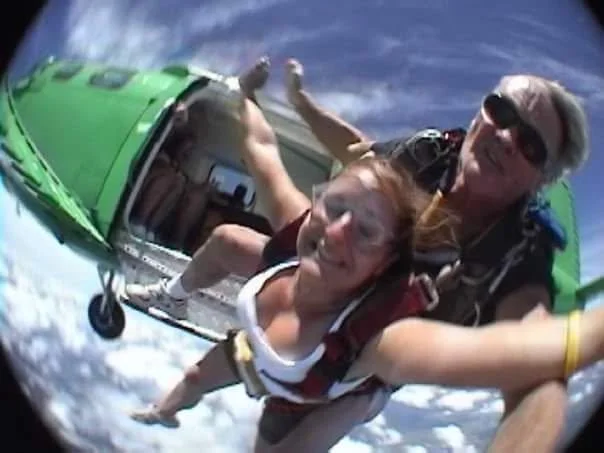
I did not always want to be here, and I did not understand humanity particularly well. I lived hard and fast. Since then I have had the privilege of travelling, standing in historical places where extraordinary beauty happened and places where terrible things happened, and witnessing enough life to understand that being human contains all of it. There is beauty and pain and failure and hope, sometimes all at once. I understand humanity differently now than I did then, and I think that is part of why The Crowded Table feels important to me at this stage of my life.
When I first started growing food, I did not understand the connection between healthy food, healthy people, healthy communities, and healthy landscapes. I knew I was sick. That was really where it started. As I continued down this path, I began to understand that I had been sick in more than one way, physically, emotionally, mentally, and spiritually, and every layer I learned about seemed to connect back to another. The more I learned about food and soil and good bacteria and clean water and the role all of those things play in our health, the more obvious it became that none of these systems are separate.
Sometimes I struggle to explain this because wellness language can become cliche very quickly. I am not interested in the whole idea that we just put on our own oxygen mask first and everything will be fine. Sometimes that language becomes a way of bypassing how difficult it is to actually be sick or exhausted or struggling. What I mean is that there is no break in a circle. Parts of the circle can become damaged. Flow can become interrupted. Soil can become depleted. A body can become unwell. A community can lose connection. A relationship can become unhealthy. But the circle itself does not disappear. The work is figuring out how to repair what has been damaged enough that the flow can begin to return.
Our landscape is not only the land outside our door. It is also our physical landscape, our emotional landscape, our mental landscape, our family landscape, and the landscape of our communities. When we stop taking care of any of those things, eventually they stop being able to take care of us. That is where the idea of healthy food leading to healthy people, healthy communities, and healthy landscapes became so important to me. It is not a straight line. It is a circle.
The more I learn about food and soil, the more I think we have complicated something that is actually quite simple. None of us can fix everything. We can, however, tend to our own little postage stamp. If enough people do that, then maybe piece by piece we create a quilt of healthier landscapes.
One of the biggest disconnects I see now is the way convenience has changed our relationship with food. I am not against convenience. I am not interested in romanticizing a life where women spend all day doing everything by hand, and I think preservation, efficiency, technology, and innovation are all good things. If you want peaches in January, please open a jar and enjoy the sunshine you preserved in August. But convenience has also taught us to expect everything all the time, and that has removed us from the natural rhythms of where we live.
Not everything grows all year. Fishing has seasons. Animals have cycles. Fields have good years and terrible years. Weather matters. A crop can be lost days before harvest. A farmer can lose animals in a storm. A raccoon can destroy an entire patch of corn. A cabbage moth can wipe out a crop. Someone can spend months growing onions only to lose them while they are curing. Those things are easy to talk about in theory, but until you have put your hands in the dirt or stood there looking at something you worked for disappear, it is difficult to understand how fragile food systems really are.
hat is why I think farming is often treated as a farming problem when it is actually a humanity problem. When we lose connection to the oak tree, we stop noticing the birds that depend on it. When we stop knowing the grasses and clovers around us, we do not notice what insects are no longer there. When we do not know the farmer, it does not really matter to us why there is no beef that week. When we do not know the fishing family, we do not understand why they could not get out on the water. When the baker is simply a product on a shelf, we do not think about where their flour came from or whether they can afford to keep making bread.
I think something changes when a community begins to know its farmer, its baker, its butcher, its fisher, its cooks, gardeners, herbalists, and food makers. You start to care whether that baker turns up every week because you have come to love the bread. Then you start caring about the flour that allows them to make the bread. You start caring about the farmer who grew the grain. You begin to understand the whole chain from the beginning to the end, not as some economic concept, but as people whose work affects your life.
That is belonging to me.
We talk a lot about belonging as though it is something abstract, but I think belonging grows through participation. It grows through knowing who and what makes up the place where you live. It grows because you become personally invested. You care when someone succeeds and you care when they struggle because their life has become connected to yours.
I have sat at very high end tables and I have sat in some of the most destitute places, and I have learned something from all of them. Class and politics and ideology and background are all interesting things to talk about, and people can have very sharp opinions about all of them, but there are some things you understand differently once you have your hands in the dirt. I genuinely think more people should spend a few days volunteering on farms, not because everyone should become a farmer, but because it changes your perspective when you understand how much uncertainty exists in producing food. You realize how little control there really is and how much humility is required.
Food has been teaching me for years without me necessarily realizing it was teaching me. Every year I grow something, I learn something about the plant and usually something about myself.
One of my strongest memories around food and plants is actually not a food memory at all. It is walking to the mailbox with my grandfather and asking him over and over again what the flowers were and which ones we could eat. He was not an herbalist. He simply came from an era where people knew the plants around them. That knowledge feels important to me now because I think a lot of us are trying to find our way back to things that used to be ordinary.
At the same time, I do not come from a fifth generation farm. I do not come from generations of bakers or cooks or women handing me perfect family recipes. I think sometimes conversations about heritage and tradition accidentally make people feel like they missed their chance if they were not born into that kind of family. I do not believe that. We are allowed to begin now. We are starting our own memories now.
You can learn to bake bread at forty. You can plant your first garden at sixty. You can put herbs in your windowsill. You can grow a tomato plant in a south facing window. You can grow three plants in your backyard and learn more from those three plants than you expected. I do not think we are ever too late to start remembering.
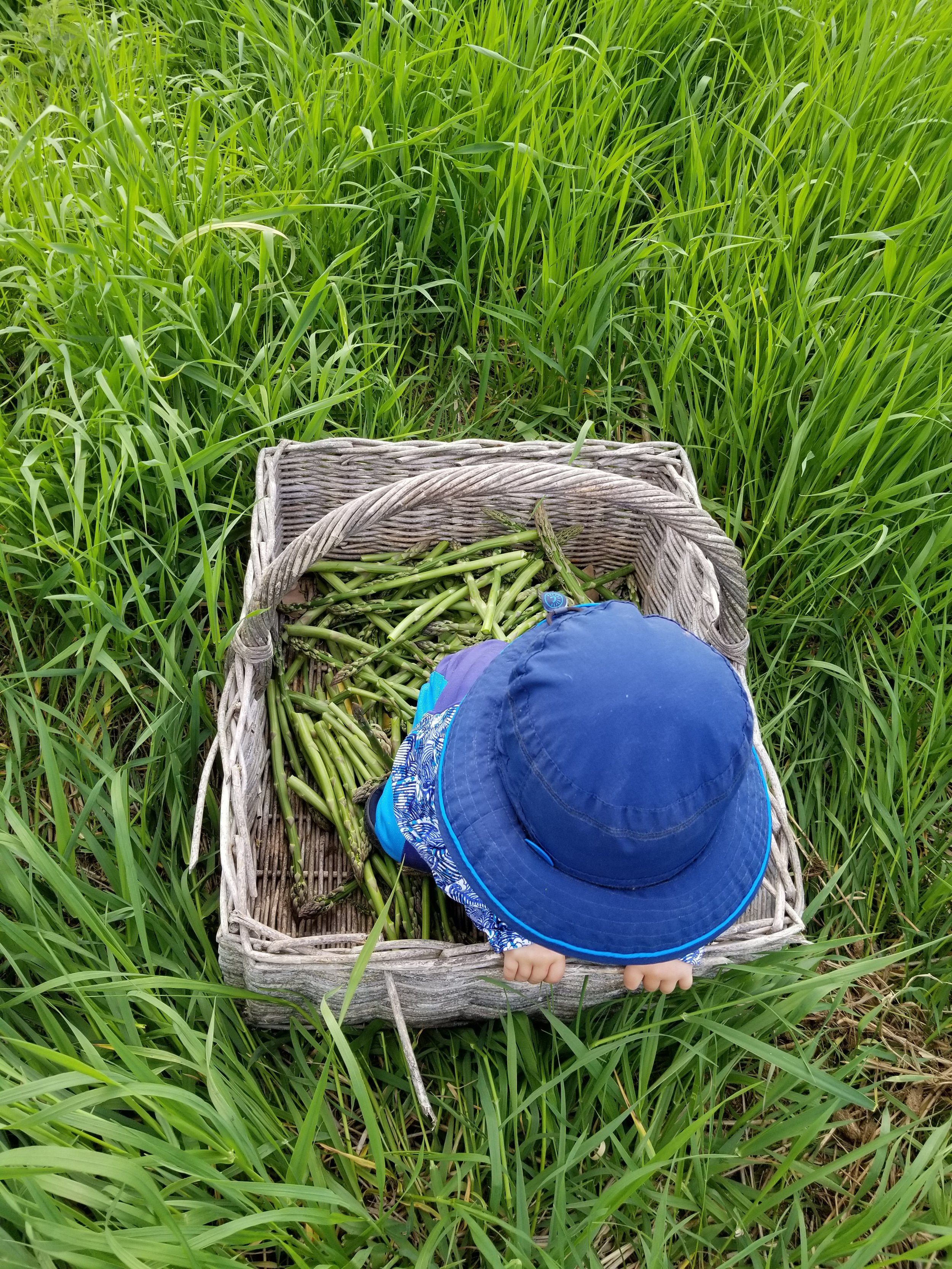
Motherhood has made all of this feel more urgent to me. There is something about knowing that your child is likely going to walk this earth after you are gone that makes the future much less theoretical. I hope Caden knows how to grow food. I hope he understands the importance of clean food for his own body and for his community. More than anything, I hope he understands that he belongs to the earth, even in moments when he does not feel like he belongs anywhere else.
That is a big part of why I care so deeply about small farms staying farmed instead of being developed. The land will outlive us. The question is what condition we leave it in.
Stewardship, to me, starts with knowing that I do not really own any of this. It belongs to the land, and I am of the land. My job is simply to take the best possible care of whatever resource I have been given for the time it is in my hands. That can be trees, grass, water, a child, a house, a business, a field, or a community. Stewardship is putting your most honest effort into taking care of whatever has been entrusted to you.
I think our food sources, our food supply, the land that holds us, and really the whole existence we are grateful to walk within are things we steward with every breath we take. We are making choices all the time about how we participate.
That includes the way we buy food.
I think buying food is participation. It is one of the ways we tell the world what we want more of.
I think about that constantly in my own business because there are many easier ways to make food than the way I am choosing to make it. The smart business decision might be to outsource production somewhere cheaper, use cheaper packaging, or buy lower grade fruit from large commercial growers that cannot use it for their premium export products. Instead I am trying to build something that supports small farms, regenerative growing, Canadian labour, real kitchens, real hands, and food packed in glass. That is a risk because it is expensive to make food that way in a world that has become used to food being cheap.
Local can mean different things to different people. It can mean your town, your hundred kilometre radius, your province, or your country. I do not think there has to be one rigid definition. What matters to me is that the closer we stay to where our food comes from, the more connected we become to the rhythms of where we live, and the more that sense of belonging deepens.
Farming has also taught me a lot about failure. I have taken a million risks in my life and I continue to take them. Some have worked and some absolutely have not. Farming and gardening have taught me that failure is not always evidence that you were on the wrong path. Sometimes failure is simply the teacher.
A seed does not care what you planned. Weather does not care about your timeline. Sometimes you do everything right and still lose the crop. Sometimes the thing you thought was a disaster turns into something better than what you had imagined. I think failure has humbled me more than almost anything else, but it has also allowed me to witness the beauty of getting back up and seeing what can exist on the other side of an expectation.
Patience is something I am still learning. I would not pretend I have mastered it. I have, however, learned that worthwhile things often take time, and not seeing a reward immediately does not mean you should not begin. That lesson exists all through farming and permaculture. I may not see the benefit of every seed I plant. Maybe someone sees it seven years from now. Maybe seven generations from now. That does not mean I do not plant it.
The seeds I am trying to plant with The Crowded Table are connection, remembrance, hope, and action. I want people to see that we are all participating in our communities whether we realize it or not. I want young girls and mothers and grandmothers and farmers and bakers and artists and herbalists and business owners and people who have never grown a single thing to all feel like there is room for their story.
I think I will know The Crowded Table is working when someone sends me a message and says, I needed to read that. Thank you for saying that. That gave me some encouragement. That made me want to try something.
I get messages like that from my social media now, but I want The Crowded Table to take that further by telling other people’s stories too. I do not want anyone to look at me and think I am some kind of anomaly. There are people everywhere doing good things. There are people everywhere trying to make things better. Every small act counts.
I would rather see everyone grow three plants in their backyard than almost anything else. Put herbs in water on your windowsill. Plant something at a senior’s home. Help build a church garden. Volunteer for a farm cleanup day. Join a bioblitz. Help someone in their garden. Learn the name of the person who bakes your bread. Spend more time outside with other people. Cheer on the ones trying to hold land as land.
And encourage people.
I do not think you have to understand somebody completely to tell them that they are doing a great job. Sometimes that kind of encouragement is the biggest seed we can plant.
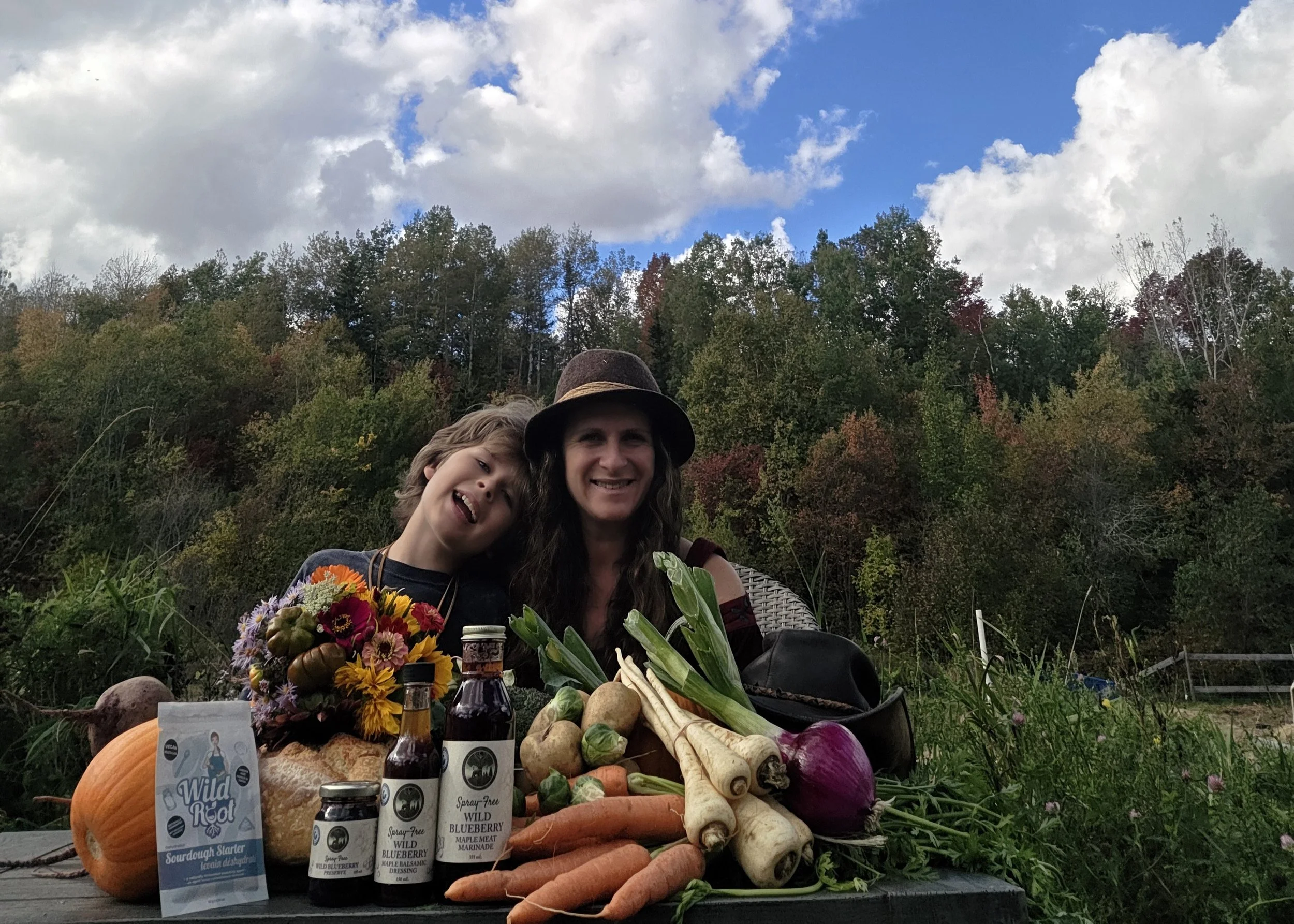
The Crowded Table is an invitation to start thinking about the impact we have with the meals we put on our table. It is an invitation to remember where food comes from and to pay more attention to the people and landscapes that make those meals possible. It is an invitation to open our doors, share more meals, put more hands into the dirt, and spend more time with each other outside.
And it does not have to look impressive.
There may be seasons when what you have to share is bread and broth for three months. Share it anyway. The way you share it, the people you share it with, and the love you pour into it are what matter.
I do not know yet what The Crowded Table will become. I hope it becomes a community. Maybe someday it becomes a movement. For now, I know that while I am here and while I am able, I want to sow something worth leaving behind. I want to remind people that we belong to one another, that we belong to the earth, that our choices matter, and that there is always room to pull up another chair.
Nurturing Curiosity and Courageously Intentional,
Tawny